
Cut It Live: The Houston Room Where Willie Nelson Recorded "Night Life"
In 1960, a broke songwriter living in Pasadena was driving thirty miles each way to sing six nights a week at the Esquire Ballroom in Houston. On one of those drives he came up with a line about the evening sun going down. On the drive home he finished it: the night life ain't no good life, but it's my life. He needed money badly enough that he sold the song outright for $150. Then he came to Gold Star Studios on Brock Street and recorded it. The producer on the session was Bill Quinn, who had opened the place in 1941. The band was six players: Paul Buskirk on guitar, Dean Reynolds on bass, Al Hagy on drums, Bob Whitford on piano, Herb Remington on steel and Dick Shannon on saxophone and vibes. They played it, together, in the room. Pappy Daily, who ran Willie Nelson's label at the time, heard it and turned it down. He said it wasn't country. "Night Life" went on to be recorded by Ray Price, Doris Day, Al Hirt and dozens of others, and it has been part of the American songbook ever since. That room is still here. That is the pitch. If you're looking for a live band recording studio in Houston, you can book the actual floor where that happened.
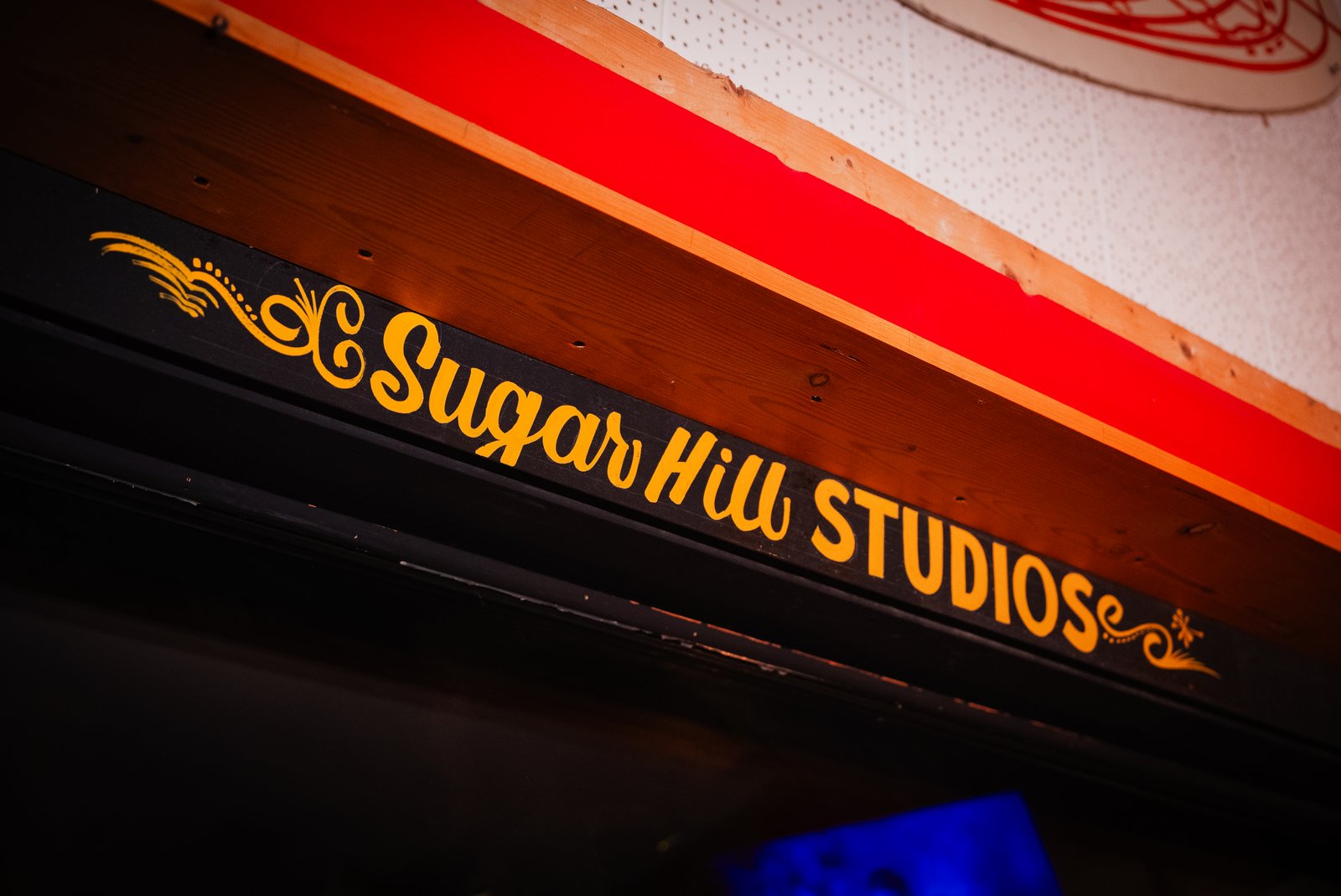
Records Made By People Playing At The Same Time
Nelson's session wasn't the exception here. It was the method. In 1946, Harry Choates cut "Jole Blon" for Quinn Recording under the Gold Star label. It hit number four on the Billboard chart, made Choates the man they called the Godfather of Cajun music, and in 2014 Rolling Stone ranked it number ninety-nine on its list of the hundred greatest country songs. Choates never saw a dime from it — he'd waived his rights — and he was dead at twenty-eight. The record outlived him by eighty years. Almost thirty years later, Huey Meaux — who had bought the studio in 1972 and renamed it SugarHill — brought Freddy Fender in to sing over an instrumental track. Fender did it bilingually, English then Spanish, and later said the whole thing took a few minutes and he figured that was the end of it. "Before the Next Teardrop Falls" went to number one on both the Billboard country and pop charts in 1975. In 2025 the Library of Congress selected it for preservation in the National Recording Registry. There is a record made in this building sitting in the Library of Congress right now. And the roll around those keeps going: George Jones, Merle Haggard, Waylon Jennings, Roger Miller, Johnny Bush, Asleep at the Wheel, Little Joe y La Familia, Lucinda Williams, Lee Ann Womack, Clay Walker, Todd Snider, Barbara Lynn, George Thorogood, Billy Gibbons.
Why Bands Are Cutting Live Again
For about twenty years the default was to build a record one track at a time. Click, drums, bass, guitars, vocals, each in isolation, each fixable forever. It works. It also produces a lot of records that sound assembled instead of played. Bands keep coming back to live tracking for reasons that are practical, not nostalgic. You get a performance instead of a construction. When four or five people play a song at once, they push and pull against each other in ways nobody can program back in afterward. The drummer leans on the chorus because the singer leaned first. You make fewer decisions later. A live take arrives with the balance, the feel and the arrangement already resolved. You are not sitting in a mix three months from now trying to manufacture chemistry. And it is often cheaper. A rehearsed band can put down basics for an entire record in a day or two on a real tracking floor. Overdub-everything workflows spread that same record across weeks of studio time. The catch is that live tracking requires a room actually built for it, and most studios in any city no longer have one.
What It Takes, Room-Wise
The Sugar Hill Room is the big tracking floor. It's built around a NEOTEK console with thirty-six inputs, which is the whole ballgame: thirty-six inputs means a full rhythm section, horns and vocals can all go down at once without anyone getting bumped off the console. Augspurger custom mains handle monitoring, with NS-10s beside them. For headphone mixes we run Behringer Powerplay P16M personal mixers, so every player controls their own balance. That sounds like a small detail. It isn't. Most bad live takes are actually bad headphone mixes — a drummer who can't hear the bass will drift, and a singer who can't hear themselves will push. Giving everyone their own mix fixes more performance problems than any plugin. The drum room is deep: six matching kits, a snare collection of around eight, plus cymbals, hi-hats, congas, bongos, tambourines, shakers and cowbells, and an upright bass. Backline includes a 1966 Fender Twin, a 1986 Marshall Superbass II, a JCM800 4x12 and JCM900, a Peavey Classic 50, SWR and Mark Bass rigs. Guitars on hand run to Telecasters, a Gibson Les Paul Studio, a Melody Maker, and a 1971 Fender Jazz Bass. Keys are a Yamaha grand, an upright, a Fender Rhodes Mark I and a Hammond B200. You can show up with your songs and your players and cut a record. That's the idea.
Bleed Is Not a Bug
The objection to live tracking is always the same: the drums are in the vocal mic, the guitar is in the overheads, and you can't fix anything in isolation. Correct. That's the sound. Bleed is what makes a room sound like a room. It's the reason records from the fifties and sixties feel like they're happening in one place instead of being stacked on top of each other. The trick isn't eliminating it, it's controlling it — placement, baffles, iso for the sources that genuinely need it, and an engineer who's decided in advance what the record is supposed to sound like. And you can still overdub. Almost every live-tracked record replaces a vocal or fixes a solo afterward. The Duke Room exists for exactly that. Cut the band live, keep the energy, then fix the two things that need fixing. If you want to go further, the room has options nothing else in Texas really has: print the take to 2-inch analog tape, or send a snare or a vocal out to the live echo chambers built into this building in 1964 and get a real acoustic space back.
Who Runs the Session
Stephen Finley, our partner, has nearly thirty years of tracking, mixing and mastering and specializes in band production, with credits including George Thorogood, Dropkick Murphys, North Mississippi Allstars and Eternal Champion. Angel Guerra has been here since 2017, is a working guitarist and vocalist himself, and covers blues and rock and roll through hard rock, doom and metal. Both of them have done the thing where a band's third take was the one and everybody in the control room knew it at the same moment. That's the job.
Before You Book
Rehearse until the arrangements are boring to you. Decide in advance whether you're playing to a click. Bring spare strings, sticks and heads. Block a full day rather than four hours — the first hour is always setup and sounds. Come in knowing which songs matter most and cut those first, while everyone is fresh. Then play the song all the way through, like you mean it, in a room that has been listening since 1941.
[BOOK A SESSION] · Call 713-926-4431
Come cut a record.
Tell us what you are making and when you want the room. Call 713-926-4431 or book online.
Book a Session