
RCA 44 Microphone at Houston's Oldest Studio
There are very few places left on earth where you can walk into a working professional studio and record your voice, your horn, or your guitar through an RCA 44 microphone Houston recording studio sessions were literally built around — and one of those places is right here in Houston, Texas. At SugarHill Recording Studios, we don't just honor the history of American music. We keep it plugged in, maintained, and ready to work. Our original 1945 RCA Type 44 ribbon microphone is not a reissue, not a replica, and not a museum piece. It is the real thing — over 80 years old and still capturing some of the most beautiful sound in the city. That alone should be enough to make you pick up the phone. But let us tell you why this microphone is one of the most significant pieces of gear in any studio in Texas.
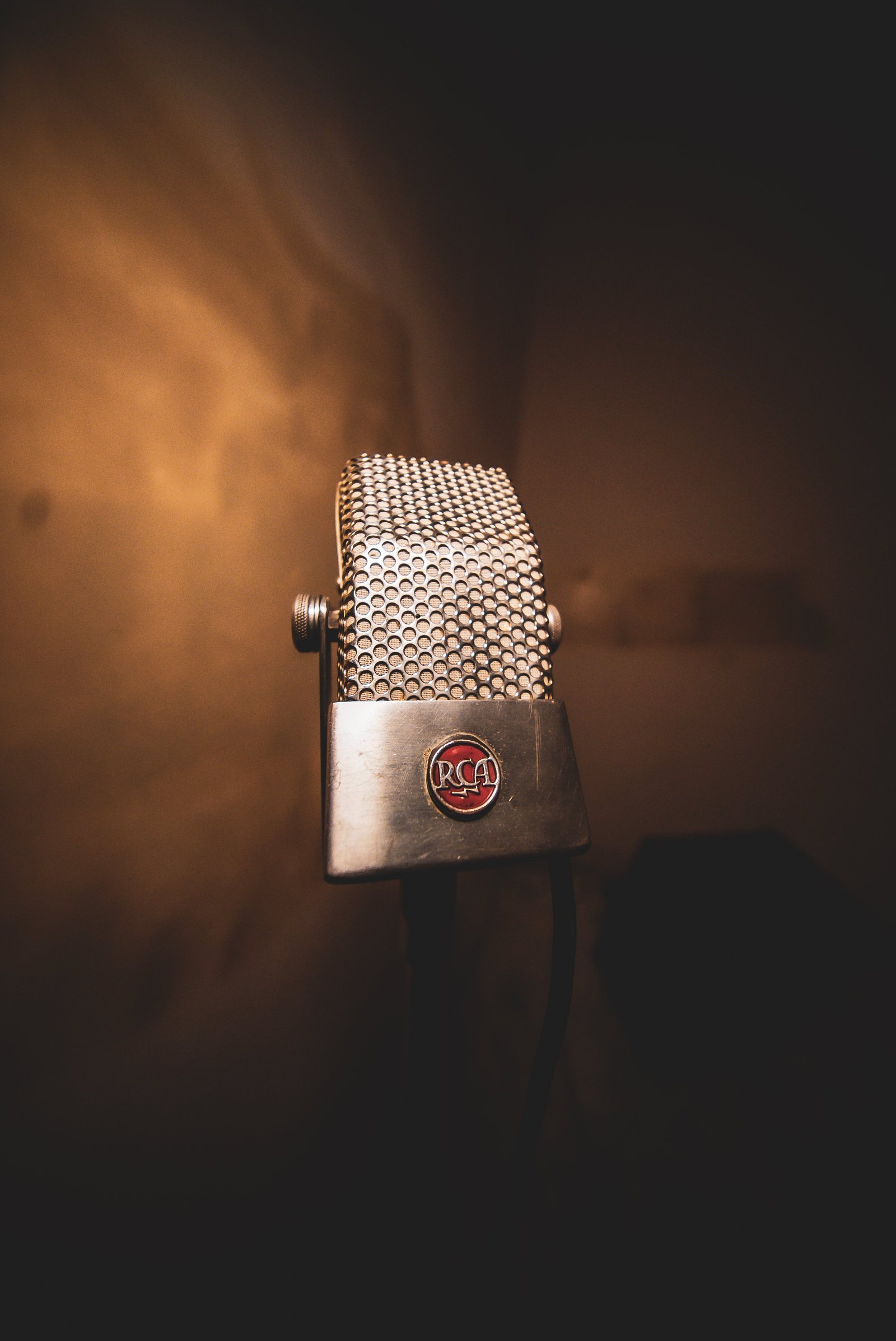
The RCA 44: A Microphone That Shaped Modern Sound
From the Golden Age of Broadcast to the Oldest Studio in America
The RCA Type 44 was introduced in the 1930s and became the defining microphone of the Golden Age of American music and broadcast. If you've ever wondered why vintage recordings from the 1940s and 1950s carry that unmistakable warmth — that sense of depth and presence that modern recordings often chase but rarely capture — the RCA 44 is a large part of the answer. This is the microphone that defined an era:
- Bing Crosby used it to perfect the intimate, conversational vocal style that invented modern pop singing.
- Frank Sinatra recorded some of his most iconic performances in front of an RCA 44, using its natural proximity effect to turn his voice into something larger than life.
- It was the standard microphone of NBC and CBS radio networks, shaping the sound of American culture for decades.
SugarHill itself opened in 1941 — the same era in which the RCA 44 was reigning supreme in studios and broadcast booths across the country. Lightnin' Hopkins, Harry Choates, Freddy Fender, and George Jones all recorded within these walls during the years when ribbon microphones like the RCA 44 were the only way to capture a great performance. Our 1945 model isn't just vintage gear — it is a direct link between SugarHill's own legendary history and the broader story of American recorded music. Finding a working, professionally maintained original RCA 44 in Texas today is extraordinarily rare. Most surviving units are in private collections or behind glass. Ours is neither. It is a living instrument, and it is available for your next session.
The Sonic Magic of Ribbon Microphones
Why the RCA 44 Sounds the Way It Does
To understand why artists and engineers get genuinely excited about recording through an original vintage ribbon microphone, you need to understand what makes ribbon mics fundamentally different from the condensers and dynamics that dominate most modern studios.
The Ribbon Element At the heart of the RCA 44 is a thin, corrugated strip of aluminum — the ribbon — suspended in a magnetic field. Sound waves move the ribbon, which generates the electrical signal that becomes your recording. That ribbon is extraordinarily light and sensitive, and it responds to sound in a way that no condenser capsule can replicate.
The Figure-8 Polar Pattern The RCA 44 captures sound from the front and the rear equally, while rejecting sound from the sides. This is called a figure-8 polar pattern, and it has several practical advantages in the studio: It allows two vocalists or a vocalist and an acoustic instrument to record facing each other on the same microphone — naturally, the way music is meant to be made. It creates a sense of space and room sound that is organic and musical rather than processed. It rejects bleed from other instruments positioned to the sides, giving you surprisingly clean separation in a live room.
The Natural High-Frequency Roll-Off Here is where the RCA 44's magic becomes most apparent to modern ears. Unlike a condenser microphone — which can sound bright, clinical, or even harsh in the upper frequencies — the ribbon element naturally rolls off the high frequencies in a smooth, gradual curve. The result is a sound that is:
- Warm and full without being muddy
- Present and detailed without being bright or fatiguing
- Silky on sibilance — the harshness on "s" and "t" sounds that plagues modern recordings is naturally tamed by the ribbon's response
The Proximity Effect Step close to the RCA 44 and something remarkable happens. As a vocalist or instrumentalist moves within a few inches of the ribbon, the low-frequency response increases dramatically — a phenomenon known as the proximity effect. This is not a flaw. It is one of the most coveted tools in the history of recorded music. The proximity effect is what gave Sinatra's voice its chest, what gives an upright bass its body, what makes a baritone saxophone sound like it fills a room. Worked intentionally, it is the difference between a good vocal take and an unforgettable one.
The RCA 44 in the Modern Studio: More Relevant Than Ever
Why Today's Artists Are Choosing Vintage Over Digital It might seem counterintuitive. We live in an age of ultra-precise digital recording, of modeled microphone capsules and AI-assisted mixing. Why would a working R&B, pop, rock, or jazz artist in 2025 choose to record through a microphone built in 1945? Because no plugin, no emulation, and no modern ribbon reproduction sounds like the original. And because the most common complaint about modern recordings — that they feel cold, sterile, or "too perfect" — is exactly the problem the RCA 44 solves.
Here's how our engineers use the RCA 44 in contemporary sessions at SugarHill:
- Vocals (Pop, R&B, Soul): The natural warmth and proximity effect give lead vocals an instant "expensive" quality that usually takes hours of processing to approximate with a condenser. Artists frequently describe their first take through the RCA 44 as sounding "already mixed."
- Brass and Woodwinds (Jazz, R&B Horn Sections): The figure-8 pattern and smooth high-frequency response capture the full, rounded tone of a trumpet or saxophone without the piercing edge that can make brass recordings sound thin or aggressive.
- Acoustic Guitar and Strings: The ribbon's natural response is exceptionally flattering to acoustic instruments, capturing the body and resonance of the instrument rather than just its attack. Room Ambience and Overheads: Positioned above a drum kit or in a room as an ambient capture microphone, the RCA 44 adds a vintage depth to the stereo image that is instantly recognizable and impossible to fake.
The analog warmth that modern producers are constantly chasing in post-production? The RCA 44 puts it in the signal chain from the very first moment of capture. You're not fixing it in the mix — you're building it into the foundation of the record.
80 Years of History. One Microphone. Your Session.
SugarHill Recording Studios has been the home of Houston's music since 1941. Beyoncé, Destiny's Child, Travis Scott, Selena, Lightnin' Hopkins — they all recorded within these walls. And now, our original RCA 44 microphone Houston recording studio setup gives you access to the same golden-age sonic character that defined American music, inside the oldest continuously operating recording studio in the United States. This is not a studio that talks about history. We record it — every single day. If you are an artist, songwriter, producer, or label looking to capture something real, something warm, something that will hold up for the next 80 years the way these recordings have held up for the last 80 — the microphone is up. The room is ready. Your session is waiting.
Book Your Session at SugarHill Recording Studios
Call us to book: 713-926-4431 Visit: 5626 Brock Street, Houston, TX 77023 Come sing into history at the oldest recording studio in America.
Come cut a record.
Tell us what you are making and when you want the room. Call 713-926-4431 or book online.
Book a Session